04ENDLESS.RUNNER/Web Game
DINO 3D
Chrome's classic offline Dino runner reimagined in low-poly 3D for desktop and mobile with dynamic day/night cycles.
- Role
- Solo Game & Graphics Developer
- Stack
- Three.js / WebGL / JavaScript / Canvas API
- Year
- 2026
- Status
- Active
- Links
- Live app ↗Source ↗
01Context
Reimagining the classic 2D offline dinosaur runner into an engaging, responsive 3D WebGL experience playable on any screen size.
02Problem
Balancing responsive input latency on touch screens with accurate 3D collision volumes and dynamic lighting without dropping frames on mobile chipsets.
03Constraints
- 01Instant input response for jump action (sub-16ms latency)
- 02Seamless adaptation between portrait mobile (390x844) and ultra-wide desktop monitors
- 03Zero external asset bloat: all geometries created procedurally in-code
04Architecture
A deterministic game loop integrating Three.js scene graphs, Axis-Aligned Bounding Box (AABB) collision checks, and parametric daylight interpolation.
- Fixed Timestep Loop
- Decoupled game physics step from monitor refresh rate (prevents higher jump heights on 144Hz screens).
- Procedural Geometry Mesh Builder
- In-code vertex generation for low-poly dinosaur, cactus hazards, and ground tracks.
- Atmosphere Controller
- Interpolates directional light intensities, fog distance, and background color across score intervals.
- Input Abstraction Layer
- Unified handler normalizing Spacebar, ArrowUp, and touch taps.
05Decisions
D1Procedural low-poly geometry over heavy glTF 3D model files
Why
Instant download with zero asset loading screens, matching the classic offline game spirit.
Result
Page loads in under 300ms on 3G mobile networks.
D2Custom AABB collision detection over full physics engines like Cannon.js
Why
A runner only needs jump gravity and hazard overlap checks; a 50KB physics engine is unnecessary overhead.
Result
Negligible memory footprint and predictable hitbox tuning.
06Trade-offs
Stylized low-poly aesthetic vs photorealistic textures
Gained
- +Timeless visual identity, maximum frame rates across low-end mobile devices
Gave up
- −Simpler visual detail
07Performance
- ↯Mesh object pooling for repeating cactus and ground segments (zero runtime memory allocation/GC churn)
- ↯Dynamic pixel ratio clamping to 2x on high-density Retina displays to prevent mobile GPU throttling
- ↯Automated game loop pause when browser tab loses focus (
document.hiddenAPI)
08Challenges
- #Configuring the camera frustum and vertical FOV dynamically so that incoming obstacles remain visible on tall, narrow phone screens without feeling distorted
- #Preventing double-jump glitches caused by touch event bubbling on mobile browsers
09Learnings
- →Game physics in JavaScript must always use elapsed delta-time or a fixed timestep accumulator to prevent speed bugs across variable refresh rate monitors (60Hz vs 120Hz ProMotion).
- →Procedural 3D assets eliminate network waterfalls and versioning complexities.
10Retrospective
Implementing Web Audio API sound synthesis (synthesizing retro 8-bit blips and jumps directly in code) would eliminate external audio asset loading entirely.
11Gallery
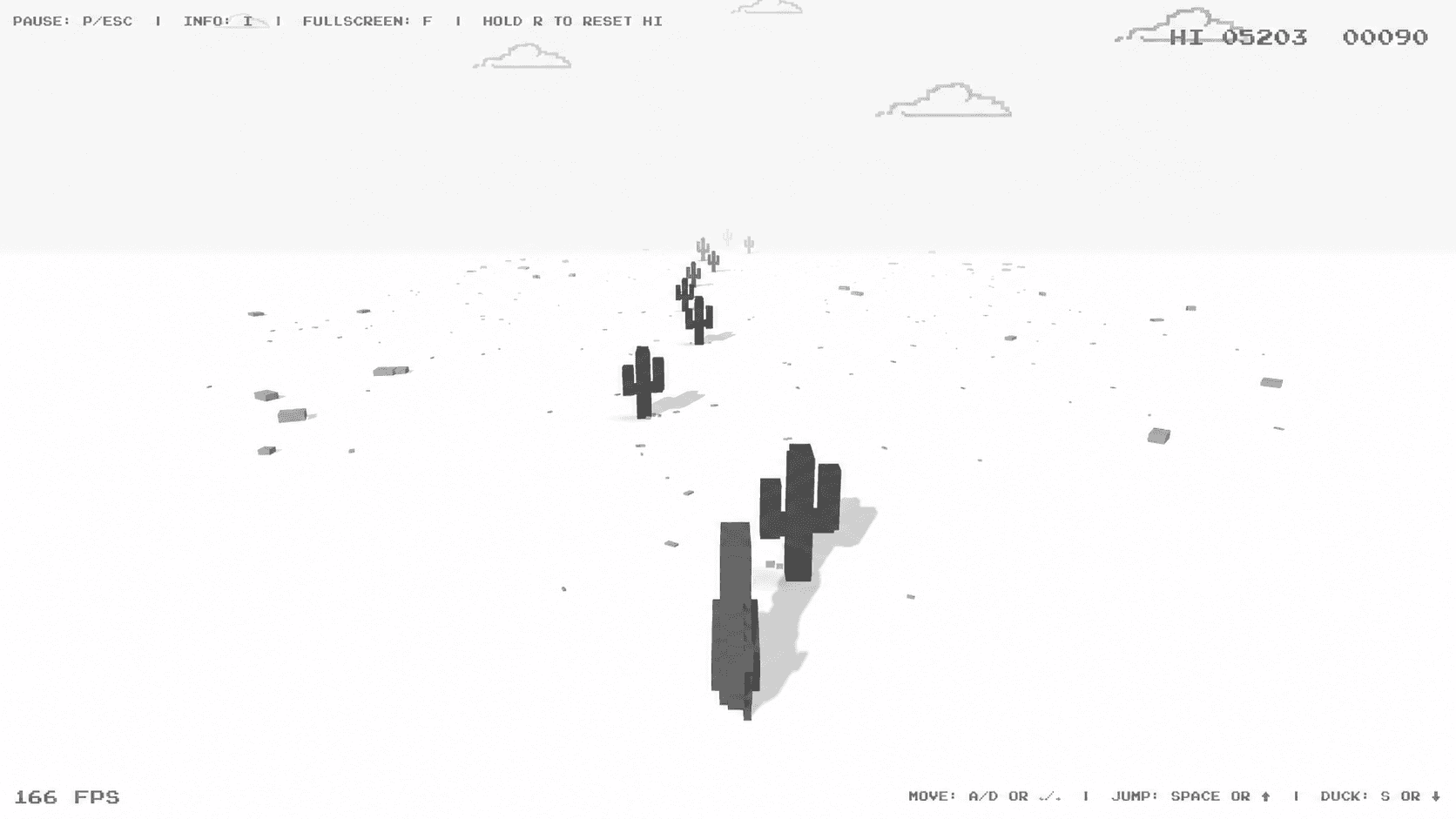
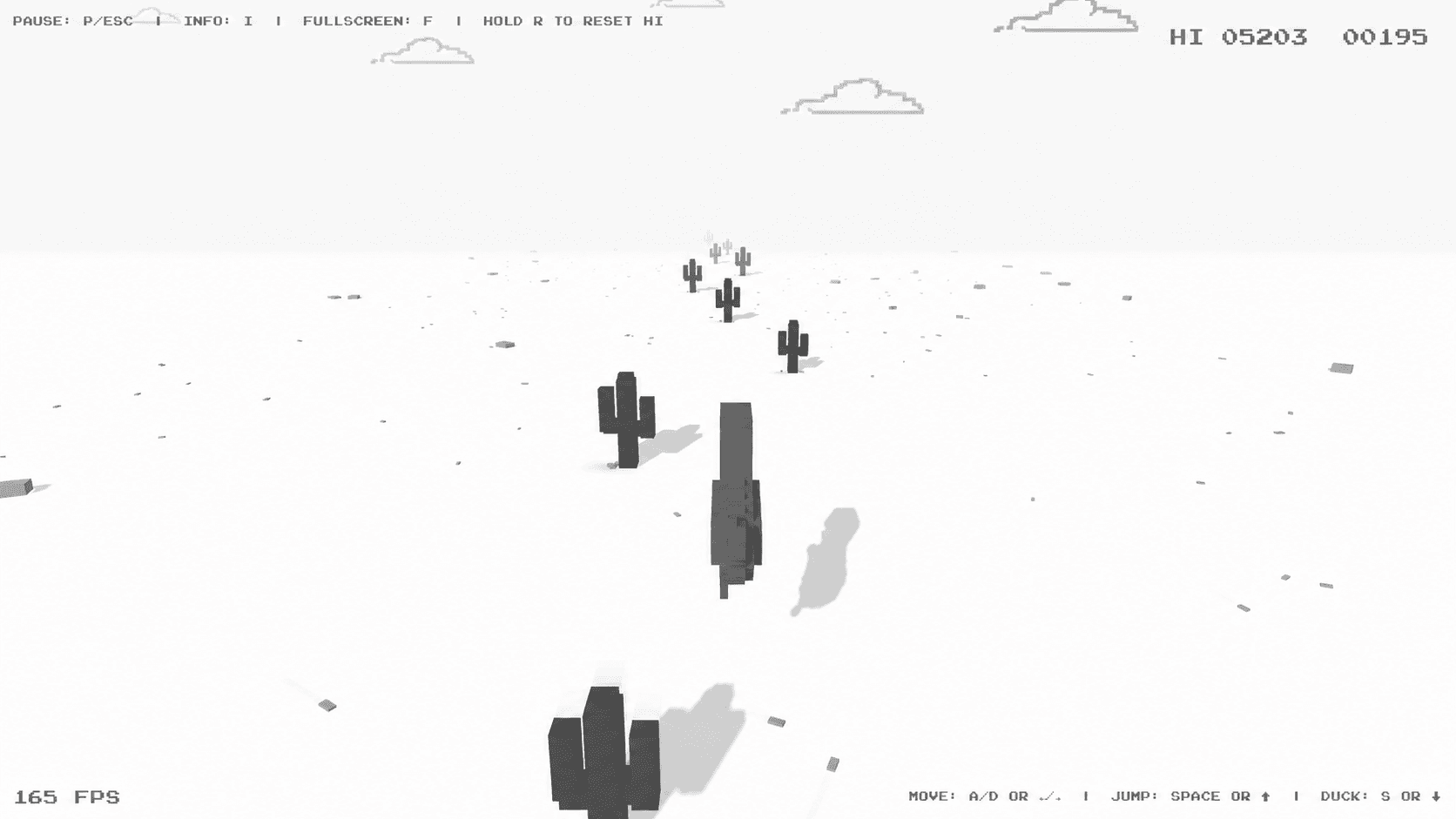
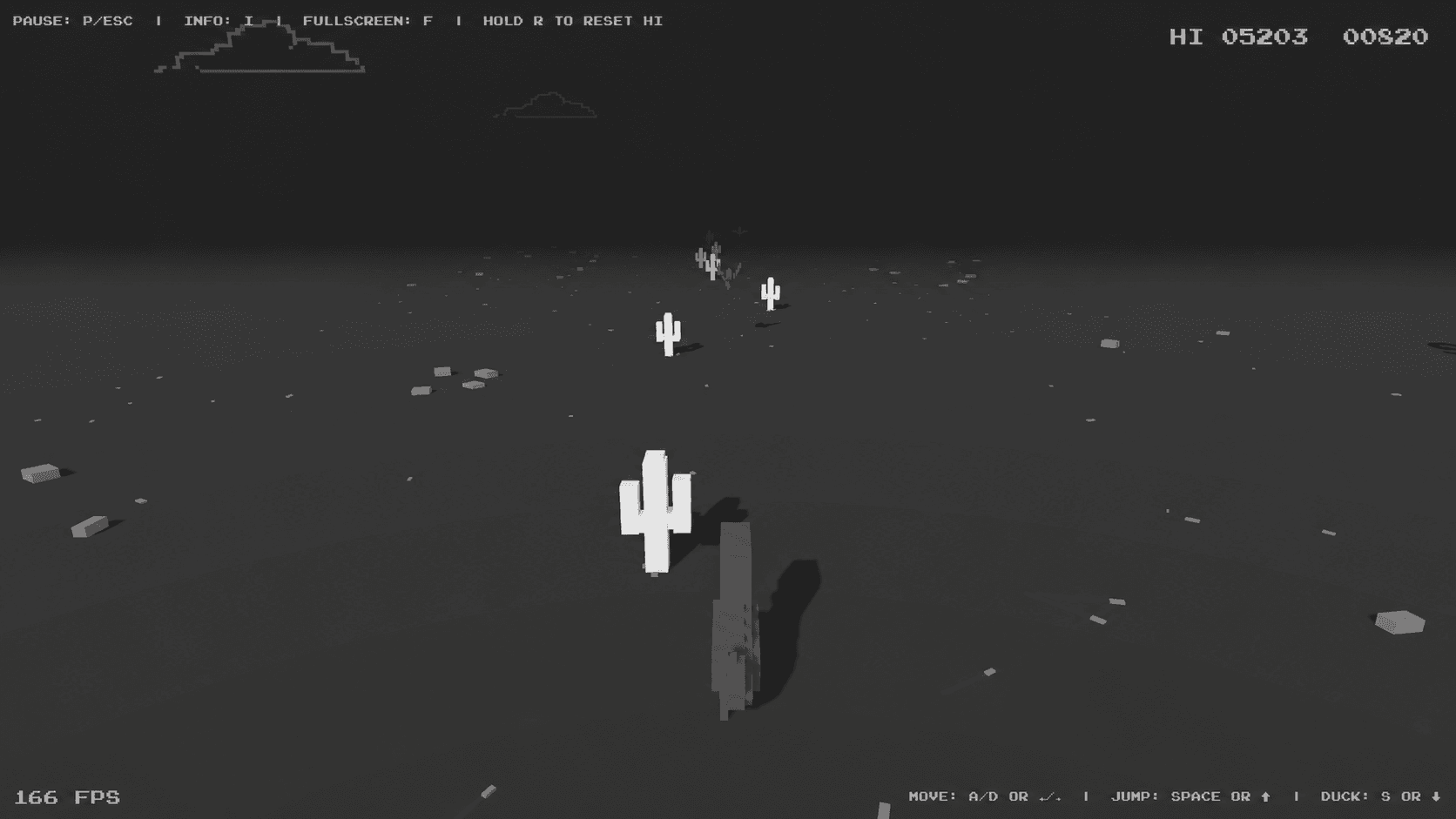
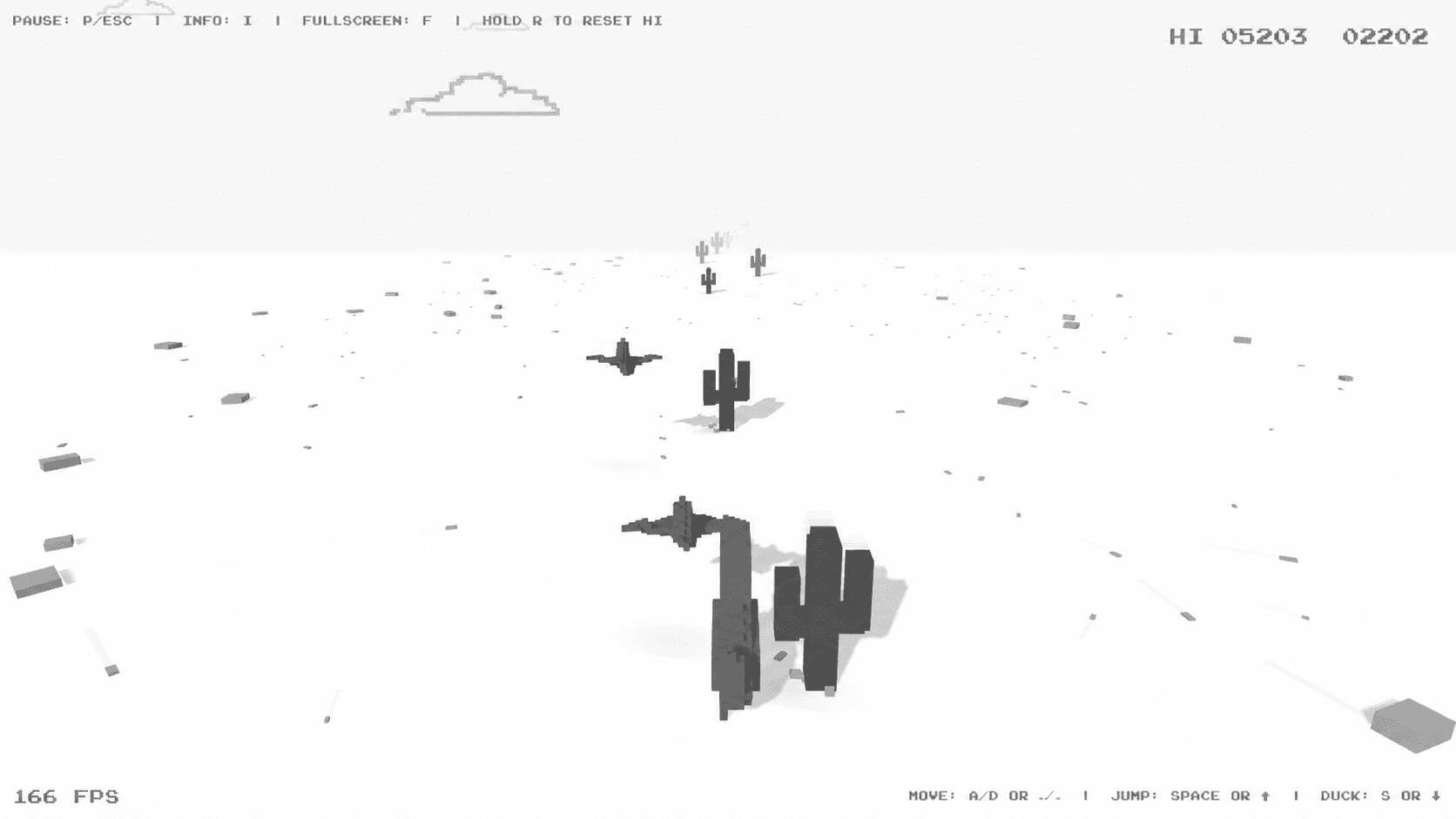
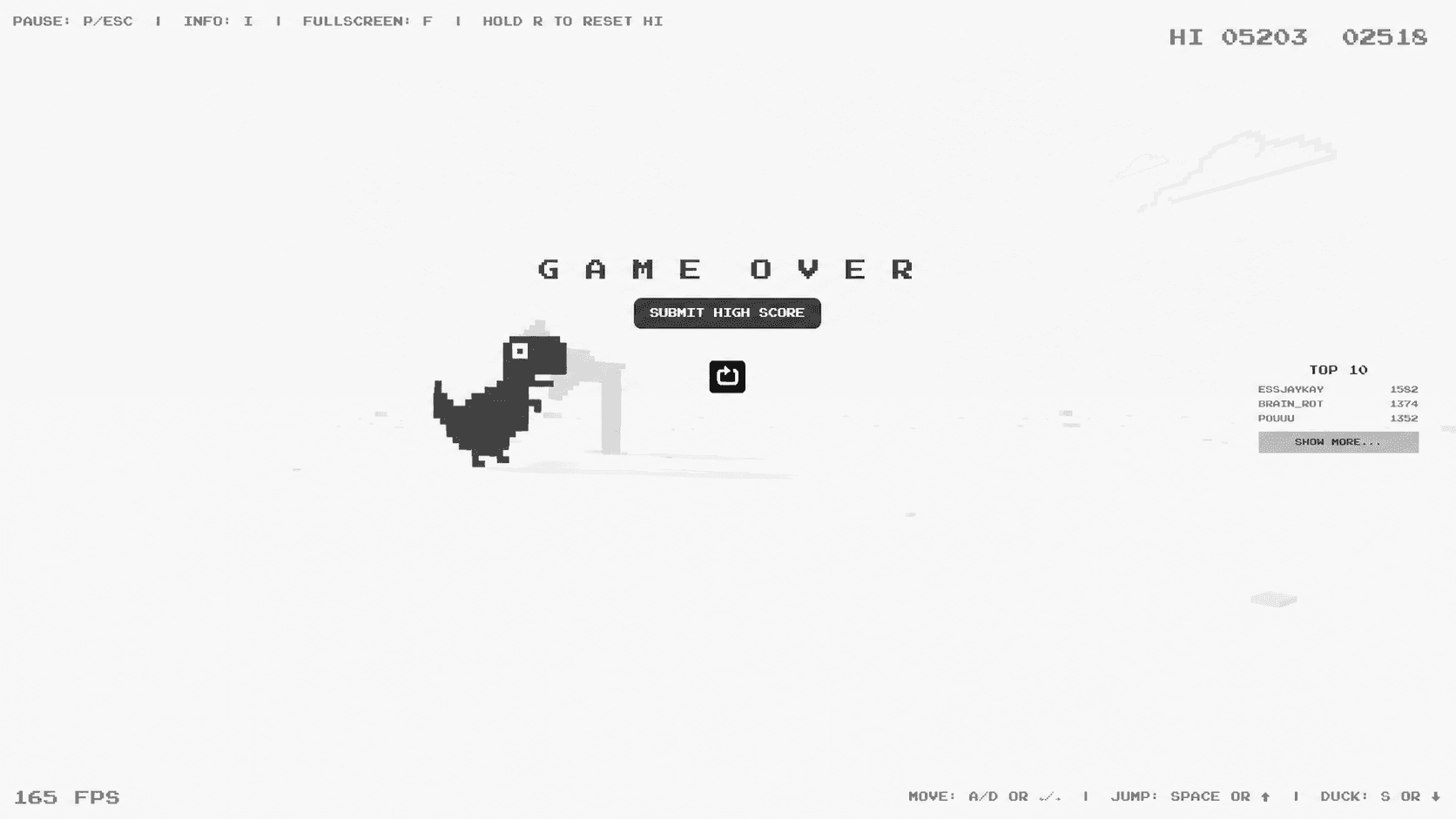
The Premise. DINO 3D reimagines Chrome's offline Dino game in a compact third-person 3D world: one button, one horizon, and a steadily escalating test of timing.
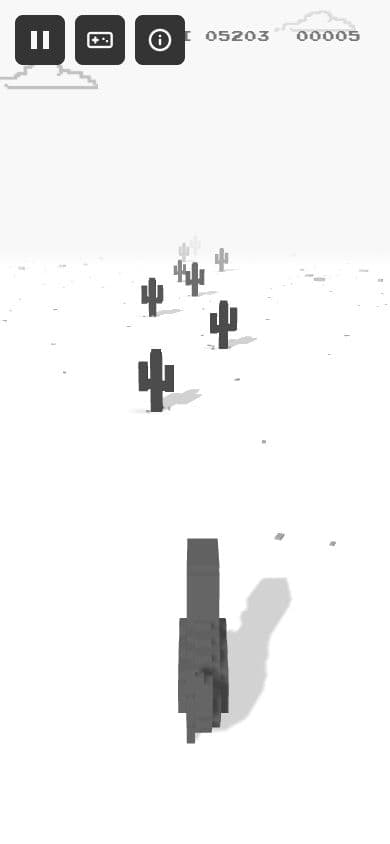
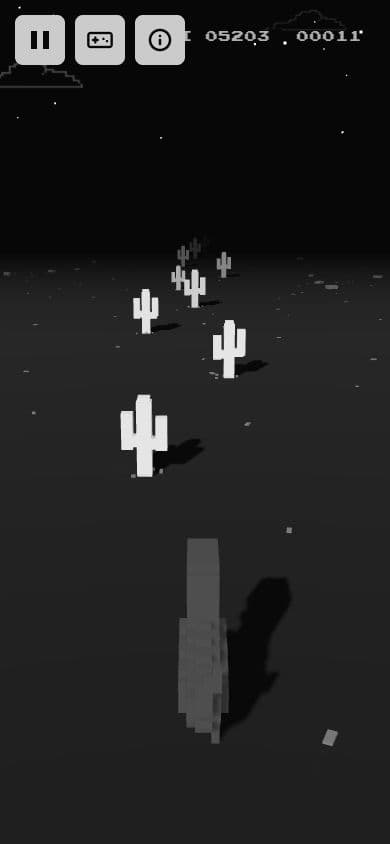
The Rhythm. Leap over cacti and stay alive as the run moves through bright daylight and an atmospheric night cycle. Switchable controls keep every decision readable on desktop and mobile.

The Archive. Built as a focused browser game, the project pairs low-poly forms with a restrained pixel-art language and a score chase designed for repeat runs. Desktop and mobile captures from the 390x844 mobile pass are included below.
Mobile · 390×844

Next project · 05
THE AI ALMANAC →
A book-inspired reference to AI concepts, with a 791-term glossary, layered explanations, and personal reading tools.